
Venezuela: What Happened and What's Next?
This is about the complex downfall of Venezuela, beginning with Hugo Chávez and the Bolivarian Revolution and leading to today’s instability. Venezuela: What Happened and What's Next?
NEWS
Alibaba
1/14/20263 min read
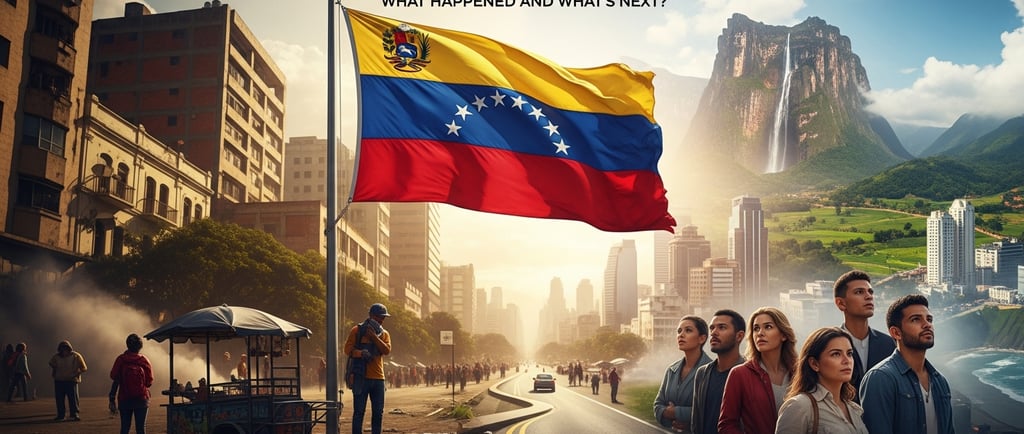
1.0 Beginning: More Than Just the News
People are aware of the crisis in Venezuela. Reports on the news illustrate economic failure and political disarray. This narrative is only a hint of the full story, although true. The actual situation is a complex mix of past influences, global power struggles, and great human strength, not always reported.
This analysis summarizes the intricate situation with five takeaways. These points offer an understanding of one of the most significant crises of our time, including the paradox of oil wealth and civil society.
2.0 Takeaway 1: The Paradox of Oil—How a Nation’s Greatest Treasure Became Its Curse
Most countries would be unbeatable if they held the world’s largest oil reserves. This is what caused Venezuela’s collapse to happen faster. With the nation’s oil wealth as its financial base, Hugo Chávez’s Bolivarian Revolution supported considerable social spending and took control of key industries. This state control reduced poverty, especially in oil.
However, this approach led to a critical vulnerability in the economy. Venezuela’s economy relied on one product, with oil constituting about 95% of its export income. The national economic model was susceptible to changes in international oil prices. This excessive reliance, not just a shortage of funds, mainly caused the country’s economic collapse. This dependence on a fluctuating commodity did more than just create a weakness;
3.0 Takeaway 2: The Staggering Numbers Behind the Economic Collapse
Venezuela’s economic ruin is an example of state failure, with macroeconomic figures that are almost unheard of in current times. The numbers are unbelievable, showing how dire things have gotten.
Two important facts show the crisis’s seriousness: According to the IMF, hyperinflation soared to hundreds of thousands of percent, which wiped out the national currency’s value. For residents, this implied enduring continual price changes occurring throughout the day.
Over the past ten years, the country’s GDP decreased by almost 70%, stopping economic activity almost completely. The repercussions of these figures in everyday life have been severe. Savings disappeared, and salaries became useless, causing major ongoing shortages of necessities. This economic disaster ignited deep political and social instability.
4.0 Takeaway 3: A Divided Nation, A Divided World
Venezuela’s political instability is a multifaceted struggle, not a simple one, with intricate global elements. Within the country, there’s a power struggle between Maduro’s government and an energized opposition. The government’s 2017 decision to dissolve the opposition-controlled National Assembly worsened this division, which prompted opposition leader Juan Guaidó’s controversial 2019 declaration of himself as interim president.
Venezuela became a proxy battleground as the domestic power struggle went global. Countries such as the United States acknowledged Guaidó and sanctioned Maduro’s government. While sanctions were in place, global powers Russia and China backed Maduro, seeing the sanctions as foreign interference. Because of this geopolitical inaction, a massive humanitarian crisis has emerged, with awful on-the-ground consequences.
5.0 Takeaway 4: The Human Cost is More Severe Than You Think
A massive humanitarian crisis hides behind economic data and political statements. The collapse of the state has significantly worsened life for its citizens. 9.3 million are in a food crisis, lacking basic nourishment.
Meanwhile, the nation’s healthcare system has fallen apart. Because hospitals don’t have enough supplies, diseases are returning. Reality is tough for the people. However, the news frequently focuses on failure instead of the stories of local resilience.
6.0 Takeaway 5: Amid the Crisis, Civil Society Fights Back
The narrative of Venezuela, though often grim, shows amazing resilience. State repression and economic collapse have not stopped a thriving civil society from appearing. Advocacy for democracy and human rights is now a critical function of grassroots movements and NGOs.
Large protests started in 2014, as Venezuelan youth used social media to organize big demonstrations. Besides protests, these groups labor to document human rights violations and offer essential humanitarian help where the government falls short. Regardless of the enormous risks, their relentless dedication highlights a firm determination to cultivate hope and spark social change from the inside.
7.0 Conclusion: A Nation at a Crossroads
The core issues in the crisis determine Venezuela’s path. To secure the nation’s future, it must end oil dependence, manage global politics, and support its robust civil society. Entrenched interests, corruption, and social trauma present significant challenges. One analysis suggests that Venezuela's future requires a delicate balance. Will the Venezuelan people’s determination be enough to overcome the massive challenges and rebuild their country as the world observes?