
How Did the US Get Maduro? Inside Operation Absolute Resolve.
Complicated political factors shaped the path to the presidency for Nicolás Maduro. How Did the US Get Maduro? Inside Operation Absolute Resolve. daily news
NEWS
Alibaba
1/10/20263 min read
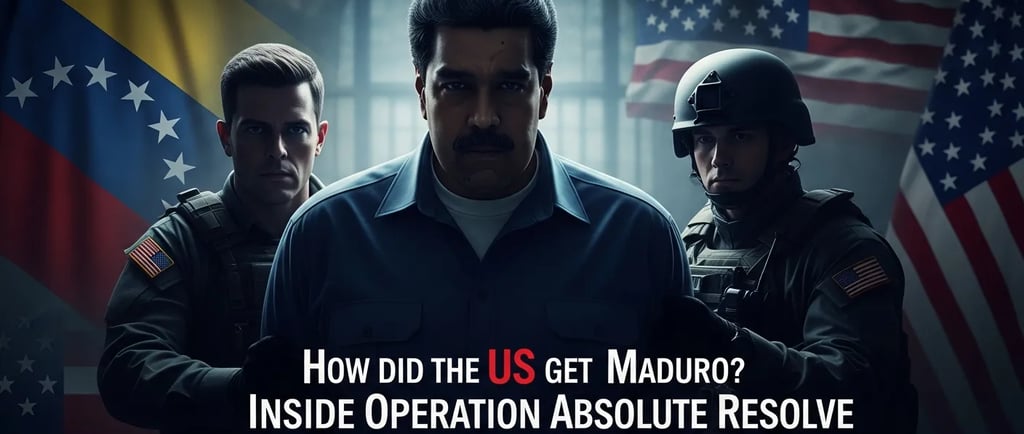
Nicolás Maduro’s Ascent: A Summary
Maduro was born in Caracas on November 23, 1962, and his working-class upbringing shaped his political views. He started as a bus driver and union leader, known for championing worker rights. This experience sparked his political journey, leading him to support Hugo Chávez.
During this time, Venezuela's politics underwent turbulent transformation. Following Chávez's 1998 election, he started many social programs. As Chávez’s foreign minister, Maduro was key in advancing these efforts, thus boosting his political influence. Maduro challenged Chávez's policies and Venezuela's polarized politics when he was elected president in a special election in April 2013 following Chávez's death in March.
How America Reacts to Maduro
Nicolás Maduro’s rule in Venezuela has been controversial, drawing a powerful reaction from the United States. Doubts about Maduro’s rule arose early due to claims of rights abuses, election fraud, and economic failures. With these problems worsening, the US acted to voice its disapproval, resulting in a clear worsening of diplomatic relations.
Targeted sanctions were among the first prominent steps taken by the United States. The Obama administration sanctioned Venezuelan officials in 2015, alleging corruption and human rights abuses. These actions began a new chapter in the US-Venezuela relationship, which persisted through following administrations. The Trump administration increased the measures against Venezuela, putting into place all-encompassing sanctions designed to hurt the Venezuelan economy. The sanctions focused on Maduro and his government, worsening relations.
US officials have also emphasized the US government's stance on Maduro. Representatives from the Obama and Trump administrations both condemned Maduro during his time in office. His administration faced frequent criticism regarding its handling of dissent, electoral practices, and the worsening humanitarian situation. In recent times, the US has backed Juan Guaidó, the opposition leader, whom many consider Venezuela’s rightful interim president.
The complexities of America’s reaction to Maduro’s rule are clear in international interventions. The US tried to get worldwide backing, seeing the Maduro reaction as part of Latin America’s democracy battle. Even with these efforts, people still debate the effectiveness of US measures, since Maduro controls Venezuela amidst economic and social turmoil.
Unveiling the Plan: Operation Absolute Resolve
Operation Absolute Resolve was a crucial tactic, organized by the U.S., against Nicolás Maduro’s Venezuelan government. During a time of increasing political and humanitarian issues, the main aim of Operation Absolute Resolve was to re-establish democracy and address the nation's socio-economic problems.
Operation Absolute Resolve’s primary goal was to weaken Maduro and aid Venezuelan opposition. This operation’s key elements were diplomacy, sanctions, and military actions to force a change in leadership. The strategic thinking was based on the belief that Maduro’s rule endangered both Venezuela’s stability and Latin America’s regional security.
Several US agencies participated in both the creation and implementation of this elaborate mission. The State Department was key to forming global groups to isolate Maduro via diplomacy. The Defense Department had to consider military options in case peace talks failed. The way these agencies work together shows a many-sided plan to counter Maduro.
Key events before and during Operation Absolute Resolve featured economic sanctions aimed at hurting the Maduro government’s finances. Prominent opposition leaders received high-profile support, demonstrating the US’s dedication to promoting democratic values in Venezuela. The operation showed how complex and urgent the U.S. felt about the problems caused by Maduro’s government.
The Consequences of Operation Absolute Resolve
Operation Absolute Resolve is a key event in U.S. foreign policy in Latin America, especially regarding Venezuela under Nicolás Maduro. Although the operation was presented as a strategic move to bring democracy back to Venezuela, its consequences reveal a complex history, which then raises critical questions about its success and broader effects on U.S.-Latin America relations.
Polarization occurred in Venezuelan society as a result of Operation Absolute Resolve. The action caused some people to back Maduro, as they saw U.S. actions as violating their national sovereignty. This reaction has strengthened Maduro’s power, hurting US efforts to promote democracy. Critics say the U.S. sanctions and support for the opposition helped Maduro, bolstering his power.
The operation has changed Latin America’s geopolitical dynamics. Russia and China have increased their involvement in Venezuela, offering economic and military aid to challenge U.S. dominance. The alliance between Maduro and these countries highlights the declining U.S. influence in Latin America, where old anti-communist strategies are fading.
The consequences spread beyond Venezuela, affecting surrounding countries facing refugees and regional economic instability. The ripple effects of Operation Absolute Resolve show Latin America’s political ties.