
Why Greenland's PM Prefers Denmark Over the US: Exploring Political, Economic, and Cultural Factors
Greenland’s government prefers its existing partnership with Denmark to a stronger relationship with the US. Why Greenland's PM Prefers Denmark Over the US: Exploring Political, Economic, and Cultural Factors
NEWS
1/14/20263 min read
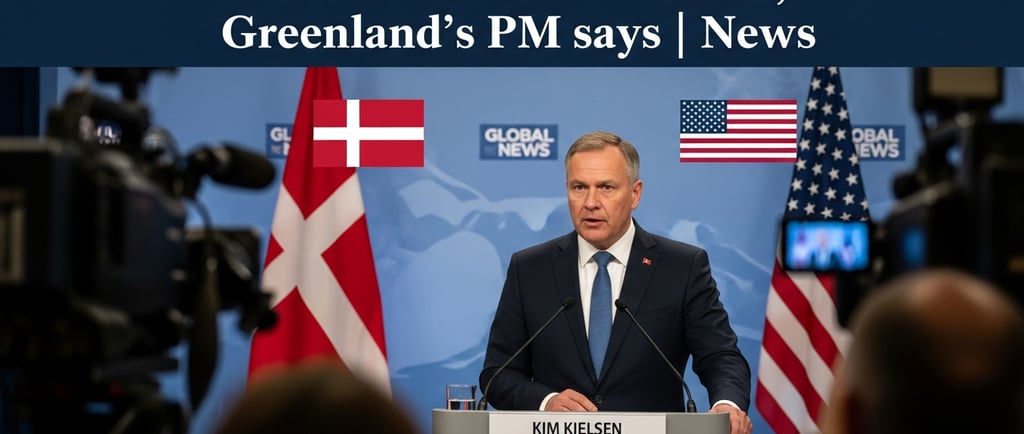
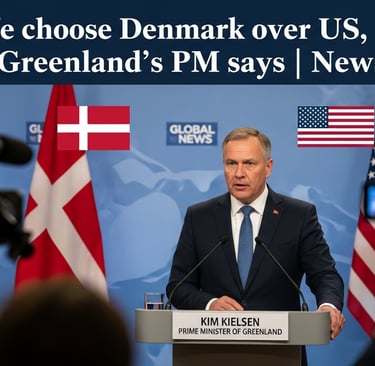
Greenland Sticking with Denmark: 4 Surprising Reasons.
A strange contradiction is emerging in the Arctic, despite the power of global forces. Greenland, an important island in the Arctic, prefers Denmark over the powerful United States. This calculated decision, made by a region seeking more independence, questions established ideas regarding international collaborations and raises interest in a partnership that transformed from a difficult colonial past to a current strategic alliance.
Why would a future country stick with its old boss instead of the world’s economic leader? The answer is a complicated blend of economics, culture, and geopolitics. The story explains how Greenland is building its future with Denmark and the four main reasons behind this surprising decision.
Economic survival is at stake, not just history.
The core of Greenland’s choice stems from a straightforward reality: Denmark backs its economic survival. The annual block grant from Copenhagen supports Greenland’s essential public services, infrastructure, and social programs, and Greenland sees it as a “vital lifeline,” not a subsidy. This financial security is benefiting society by allowing it to plan for the future.
This collaboration prioritizes future development over mere maintenance. Danish businesses are putting money into Greenland’s tremendous resources, especially minerals and rare earth elements that are in high demand. Through this collaboration, Greenland gains access to “advanced technology and expertise” within a reliable structure. Greenlandic officials believe their long-term, collaborative approach differs from potential American investment, which they might see as “exploitative instead of collaborative.”
Cultural fit beats a superpower's influence.
Denmark and Greenland’s shared social and cultural worldview is the root of Greenland’s decision. Greenlandic identity merges Inuit and Danish cultures, forming a tradition-focused society. The link is complex, as shown by their attitude to language: many Greenlanders see Danish as a “connection to their historical roots” rather than a colonial legacy.
The agreement has profound roots. The emphasis on “community welfare and environmental sustainability” in Greenland appeals to the Danish values, thus creating a strong sense of belonging. This philosophy contrasts with values “linked to the U.S.,” which often favor “individualism and capitalism.” Greenland values cultural preservation and a known social structure, even over economic benefits from a partnership risking its identity.
Better defense comes from a small ally.
A counterintuitive strategy involves partnering with a smaller power, such as Denmark, for geopolitical safety. With climate change creating alternative shipping routes and exposing valuable resources, the Arctic has become a contested area for the United States, China, and Russia. Amidst this instability, Greenland needs a strong, trustworthy partner for protection.
Greenland benefits from its ties with Denmark, gaining diplomatic and security advantages while avoiding major conflicts. People believe a formal partnership with the U.S. “risks escalating geopolitical tensions.”
Denmark Paves the Way for Self-Governance.
The most unexpected part is that Denmark is helping, not hindering, Greenland’s independence. The Danish Parliament passed key laws, like the 1979 Home Rule Act and the 2009 Self-Government Act, that gave Greenland more power over its own internal affairs, including its rich natural resources.
This unusual structure has formed a cooperative relationship. Greenland governs itself and creates its own systems, but Denmark handles big international issues like foreign affairs and defense. Denmark remains important in the Arctic and a reliable partner in a crucial geopolitical area. This alliance creates a firm base for Greenland to establish itself, showing that collaboration, not division, is the best route to independence.
Careful planning will balance the future.
Greenland chooses Denmark not for sentimental reasons, but for a practical future. This partnership rests on economic stability, cultural harmony, and strategic security awareness. It seems reliance can be a smart way to achieve freedom. Greenland manages its ties with Denmark as outside powers take increasing interest in its future. It looks for collaborations that value its "sovereignty and self-determination."