
The Collapse of Nicolas Maduro's Regime: Key Factors Behind His Fall from Power.
Maduro was apprehended in Caracas by U.S. special forces on January 3, 2026, and brought to the United States to face criminal charges. The Collapse of Nicolas Maduro's Regime: Key Factors Behind His Fall from Power.
NEWS
Alibaba
1/4/20261 min read
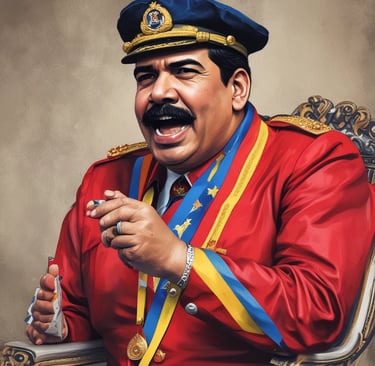
A Summary of Maduro’s Rise.
After replacing Hugo Chávez, Nicolas Maduro, who became President of Venezuela in April 2013, was first supported. His predecessor’s legacy, Venezuela’s oil riches, and wealth redistribution policies significantly shaped his ascent. But when economic and political instability took hold, his former tactics caused his downfall.
Economic Downturn and Poor Management
Venezuela’s crippling economic crisis caused Maduro’s downfall. Despite being a wealthy nation in Latin America, Venezuela’s economic downfall was because of Maduro’s rule. Since 2014, the economy has shrunk by as much as 75%. People suffering from hunger and lacking basic needs defied his rule, causing huge protests and a big drop in his popularity.
Repression by politicians and a decline in authority.
Faced with increasing opposition, Maduro used political repression to silence critics and weaken democracy. Despite global disapproval, Maduro stayed in power through fear and force. Yet, this suppression triggered global disapproval, resulting in penalties from the U.S. and other countries, isolating his government even more. His government lost its legitimacy both in ignoring the people’s will and in using authoritarianism.
Celebrating Global Influence and Protest
The crisis culminated when Juan Guaidó emerged, proclaiming himself interim president in January 2019, alleging Maduro’s 2018 re-election was illegitimate. Maduro faced increased pressure because several countries recognized Guaidó, including the United States and members of the European Union. With Guaidó at the helm, the opposition united, gaining international support to challenge Maduro’s government, thus increasing pressure for democratic reforms. This backing from other countries was important for fighting against Maduro’s power in Venezuela.
In conclusion, the legacy was tumultuous.
Overall, Maduro’s removal from power stemmed from a mix of economic issues, political control, and the opposition. Many considered his leadership unbeatable because of oil wealth and his predecessor’s charm, but governing challenges and Venezuelans’ desire for change ultimately weakened it. These elements together created a complicated situation, which caused his downfall and changed Venezuela’s political system.