
Taiwan's Coast Guard Confronts Chinese Vessel Amid Tensions Over Naval Blockade.
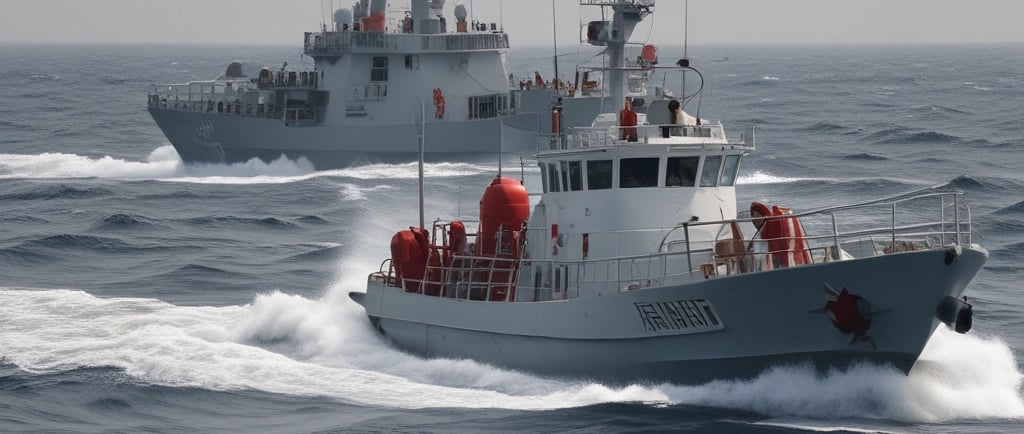
The Taiwan-China relationship is complex, with historical roots, cultural ties, identity challenges, and geopolitical tensions. Taiwan's Coast Guard confronts Chinese vessel Amid Tensions over Naval Blockade.
NEWS
Alibaba
12/31/20253 min read
Examining Taiwan-China Relations.
After their defeat in the Chinese Civil War in 1949, the Nationalist government fled to Taiwan, and the Communist Party established the PRC on the mainland. After their defeat in the Chinese Civil War in 1949, the Nationalist government fled to Taiwan, and the Communist Party established the PRC on the mainland. Although Taiwan governs itself, China views it as a province to be reunited.
Historical events between Taiwan and China influence their territorial disputes, which often include military shows and diplomatic clashes. China’s assertion of power over Taiwan causes issues, including military drills and naval displays aimed at demonstrating its ability to govern the Taiwan Strait. Taiwan Strait. Taiwan maintains its sovereignty, and many citizens identify as Taiwanese, not Chinese. This national identity shapes Taiwan’s defense policies, as does its strategic alliance with the United States.
China’s military modernization and naval expansion have altered the balance. These events put Taiwan at risk, sparking new defense strategies aimed at thwarting attacks and recovering. Tensions rose after events like the U.S. selling arms to Taiwan and worldwide support for Taiwan’s global role. China views Taiwan’s actions as territorial threats, despite their goal of improving global security.
Taiwan’s Coast Guard was involved in the incident.
Strait tensions were on display as the Taiwan Coast Guard met a Chinese vessel near its waters. The confrontation happened amid China’s supposed illicit surveying, sparking Taiwan’s strong criticism of its sovereignty.
Prior to the incident, the Taiwan Coast Guard had been observing the Chinese vessel’s actions at sea. Sources reported the ship sailed in waters Taiwan views as essential for its security and economy, and it was from a larger group. The Taiwanese government worries about these intrusions.The Taiwanese government worries about these intrusions.
The Coast Guard planned a plan. The Coast Guard aimed to show its power through language and imagery. According to Taiwanese officials, these conflicts should uphold sea laws and prevent future Chinese assaults. This event reveals short-term actions and long-term plans on the water.
The event is essential for cross-strait relations and maritime security in East Asia. Taiwan’s Coast Guard’s response to China is being observed, with the regional implications being assessed. This escalating conflict, similar to this one, destabilizes the current geopolitical situation, causing worries about maritime activities and the potential for unintended conflict.
China’s Naval Blockade Drills: An Analysis
China’s naval exercises are under global scrutiny, raising concerns about maritime security. These exercises have multiple strategic aims: showing force, confirming territorial rights, and backing national narratives. The drills should show might, focused on Taiwan and the U.S.
These blockade drills highlighted China’s military, naval tech, and readiness. These exercises display China’s improving blue-water capabilities, featuring modern ships, subs, and aircraft. Plus, the drills demand tricky coordination, showing the PLA Navy’s growing ability. These changes have concerned regional actors, prompting more care and improved protection.
Taiwan sees these drills as direct threats to its independence, a mark of Beijing’s increasing hostility. Taiwan’s government has responded by increasing its military and reinforcing security partnerships with allies, the U.S. This answer highlights how Taiwan acknowledges potential outcomes from aggressive military actions, spanning from increased tensions to conflict.
Other regional play including theirs, like Japan and Southeast Asia, are observing because they too seek open navigation and regional stability. The drills conducted by China’s navy may have global effects on maritime rules, security and cooperation. These merging trends highlight the intricacies of the current strategic rivalry in the Asia-Pacific.
Worldwide Response and What Lies Ahead
The international community has taken notice of the growing tensions between Taiwan and China, resulting in many diplomatic reactions. The US, Japan, and the EU, all major global actors, are worried about the recent events in the Taiwan Strait. These countries restated their dedication to peace, stressing the need to protect sea travel. The U.S. has also shown its commitment to Taiwan by selling arms and providing military training, strengthening its function in regional stability.
The U.S. demonstrates its commitment to Taiwan by selling arms and providing military training, reinforcing its role in regional stability. Here, the global mood seems to favor more diplomacy, urging Taiwan and China to talk instead of more military displays. These diplomatic attempts are vital; misunderstanding might spark unexpected wars, threatening Taiwan and world trade.
The future of Taiwan-China relations is unclear. Because of China’s ongoing naval blockades, analysts suggest Taiwan might reinforce defenses.Taiwanese The government plans to improve its defenses, emphasizing asymmetric warfare to counter potential Chinese aggression.
Taiwan will work to build stronger alliances with countries aligned with its principles, forming collaborations to enhance its defenses and ward off potential moves by Beijing. Taiwan’s global partnerships are important in defending against China.