
Examining Trump's Proposal to 'Own' Greenland: A Strategic Move Against Russia and China
Because of Trump’s proposal, people have brought fresh attention to the region’s historical and strategic value. Examining Trump's Proposal to 'Own' Greenland: A Strategic Move Against Russia and China
NEWS
Alibaba
1/11/20263 min read
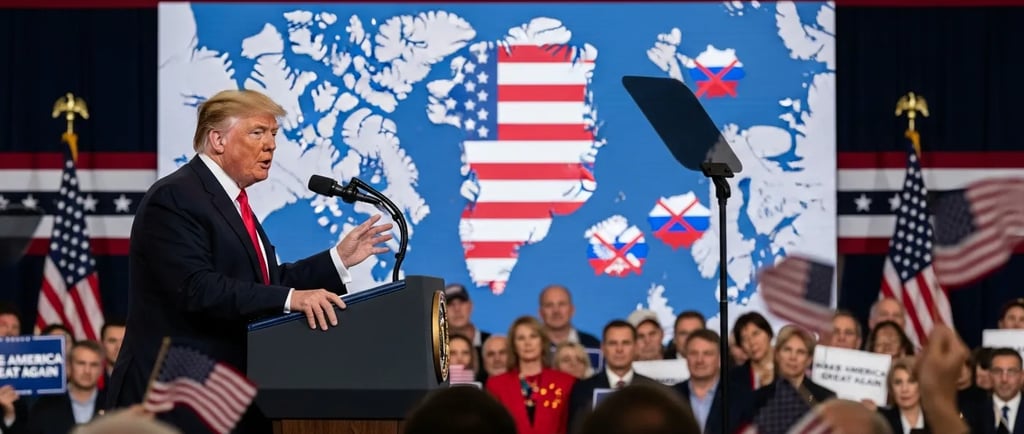
Greenland Debate: An Overview
With geopolitical interests, the US is watching Greenland, a part of Denmark. Since WWII, the U.S. has been interested in Greenland, setting up bases. Understanding Trump’s current statements requires this historical context.
The United States has tried to buy Greenland multiple times. The most significant attempt happened in 1946; President Harry S. Truman offered to buy the island for $100 million in gold. Denmark rejected the offer, but Greenland’s strategic importance to the U.S. persists. The U.S. views Greenland’s placement as essential for observing and interacting with Russia and China.
Because of climate change, the Arctic is opening up, sparking competition for resources and strategic gains. Russia and China’s Arctic actions are causing the U.S. to rethink its Greenland strategy. Trump’s Greenland claim implies a push for a stronger Arctic presence, countering potential threats.
The Greenland debate exemplifies nationalism, military strategy, and international relations. Trump’s plan sparks debate, expanding discussions about American Arctic interests.
The Geopolitical Ramifications of Greenland Ownership
The US potentially gaining Greenland could affect its global standing and its relationships with major countries like Russia and China. Greenland’s location allows for better surveillance and military ops in the Arctic. The United States could have more influence over Russia and China if it controlled this territory.
Greenland’s strategic location could improve U.S. military response capabilities. Armed forces acknowledge the Arctic increasingly as an emerging theater of geopolitical competition. If the U.S. owned Greenland, it might stop Russia and China’s Arctic moves and improve security with NATO.
Experts also consider Greenland’s economy to have rich mineral and hydrocarbon deposits, which makes it desirable for resource exploitation. This fortune might help the U.S. economy and offer vital resources amid growing global needs. Climate change is causing ice to melt, which unlocks shipping lanes and resources, boosting Greenland’s strategic role in international commerce. Possessing Greenland would offer the United States key military and economic benefits, leading to a more helpful power balance with Russia and China in the Arctic.
How People Responded to Trump’s Idea
People reacted to Donald Trump’s Greenland proposal in various ways, showing how controversial it was. Americans had varied reactions. Certain politicians backed it, viewing it as a strategic play to bolster the U.S. in the Arctic. Proponents believed that possessing Greenland would benefit America’s mineral resources, sea lanes, and strategic location against Russian and Chinese Arctic moves.
In contrast, many political leaders denounced the idea, seeing it as unworkable and similar to colonialism. Important voices from both parties, including some of Trump’s allies, said the proposal was without policy and would upset a key ally: Denmark, which governs Greenland. Mette Frederiksen, the Danish Prime Minister, rejected the idea, saying Greenland wasn’t for sale, leading to talks about history and potential territorial claim issues.
International responses shared these feelings. Several world leaders were worried about the diplomatic effects. Experts cautioned that claiming Greenland could worsen issues with Russia and China, both of whom are showing more interest in the Arctic. For example, Russia’s military activity in the Arctic has increased, and analysts think the Kremlin would view U.S. goals in Greenland as a direct threat.
Public opinion varied. Some laughed it off; others saw serious issues. The diverse reactions underscore complicated international relations and the historical impact of territorial talks in today’s global discussions.
In conclusion: the future of America. Interests in Greenland.
Trump’s Greenland acquisition plan has deep and varied effects on U.S. interests. The initiative is a strategic move against Russia and China and shows a shift in US Arctic foreign policy priorities. Buying Greenland could become a military and economic advantage, boosting America’s strategic position in the face of growing global rivalry. Greenland is a key asset because of its resources and trade route importance, affecting national security and climate change.
Although some experts say the plan is talk, it begins an important conversation about what the U.S. wants in the Arctic. The proposal might encourage significant diplomatic action to build stronger connections with Denmark and other Arctic states. It also prompts us to consider the wider impact of American expansion on global politics and relationships. The U.S.’s approach to these talks could boost its Arctic power or cause friction with China and Russia, who are eyeing the area.
A comprehensive foreign policy involving cooperation, negotiation, and strategic positioning will be essential for the U.S. from now on. Clear communication and Arctic stakeholder engagement are crucial for beneficial initiatives and regional stability. To sum up, the U.S. will need both strategic military positioning and diplomacy to protect its interests in Greenland, promote peace, and manage Arctic resources. Valuing the next several years is crucial, as the consequences of this proposal may develop and potentially alter America’s influence.