
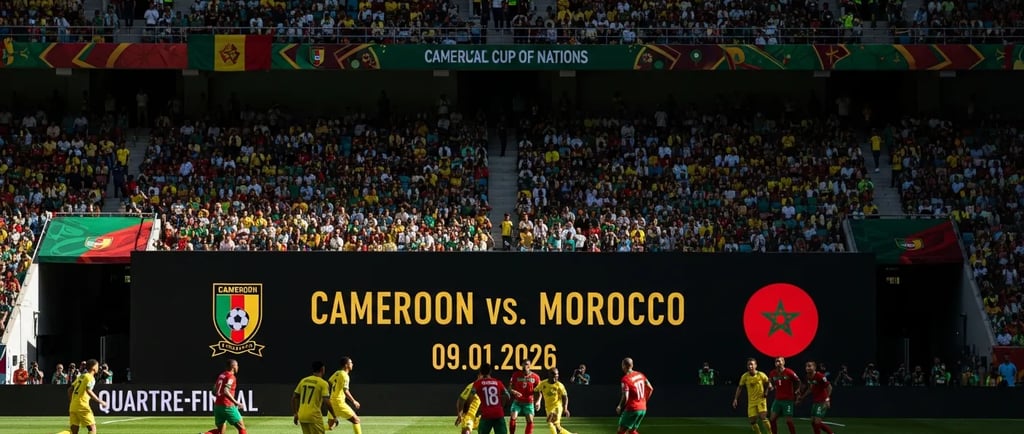
African Cup of Nations Quarter-Final: Cameroon vs. Morocco - 09.01.2026
Expect an exhilarating quarter-final match between Cameroon and Morocco in the African Cup of Nations. African Cup of Nations Quarter-Final: Cameroon vs. Morocco - 09.01.2026
1/9/20263 min read
Upcoming Match: Strategies and Players
.The teams have both shown outstanding skill, and everyone’s eager to watch them play. We must identify the crucial participants expected to influence the game.
Vincent Aboubakar takes center stage in Cameroon. The striker is playing well, demonstrating both goal-scoring and skill. His offensive strategy relies on his tactical knowledge and experience. Goalkeeper André Onana strengthens the defense with his dependability and leadership, boosting the team’s defensive structure. Morocco’s attackers will challenge his reflexes and shot-stopping.
Morocco will rely on Hakim Ziyech, whose midfield creativity can direct the game and generate chances. Morocco’s gameplay depends on his vision and passing, especially when they counterattack. A strong defense depends on Romain Saïss’s ability to defend.
Both coaches might use different strategies. Cameroon could attack with width and speed against Morocco’s defense, while Morocco might focus on possession and finding opportunities. Their past meetings show their matches are often close, heightening the quarter-final’s drama.
History: The Return of a Rivalry
Cameroon and Morocco’s rivalry in football is rich with history and emotion. Their continental records add significance to each game they play against each other.
Cameroon, nicknamed the Indomitable Lions, has a strong AFCON record, with five wins. They’ve become a major player in Africa because of their performances. In contrast, Morocco, the Atlas Lions, has had victories, including winning in 1976 and advancing far. This shared history builds a strong but respectful rivalry, with outstanding football and exciting matches.
These two countries have a history of thrilling football matches, each one adding an additional layer to their rivalry. Recent encounters have been similarly captivating, displaying existing strategic skill and physical ability. Their AFCON qualifying clashes, for instance, have seen last-minute goals and thrilling finishes. These entertain fans and stir feelings beyond the sport.
Cameroon and Morocco have a tight rivalry, as shown by their head-to-head record. Previous tournaments have shown them competing in crucial matches, suggesting the importance of each meeting. Fans await the quarter-final match in 2026, eager to see the next stage of this rivalry.
Audience Interaction: Setting the Stage
On January 9, 2026, the quarter-final between Cameroon and Morocco will be a major sporting event. Fans are already expressing their excitement by buying merchandise, organizing viewing parties, and meeting before the match. Fans are interacting online, buzzing with anticipation, and sharing their game-day thoughts.
Each group adds its own style to the traditional match’s fan culture. Cameroonian fans create the electrifying atmosphere in the stadium with their rhythmic chanting and vibrant displays. Such displays of fellowship improve the in-stadium experience and inspire viewers.
People expect a large crowd at this quarter-final, and ticket sales are going well. International travelers heighten the event’s excitement. Fans are connecting and sharing opinions on outcomes using hashtags, as social media is full of predictions and comments.
Fans are important to the tournament’s vibe. Their steadfast backing boosts team morale, creates excitement, and crafts memorable match stories. Fan excitement will build, helping to make the stadium atmosphere memorable.
After-Game Review: Implications for Upcoming Competitions
The AFCON quarter-final between Cameroon and Morocco on January 9, 2026, was a pivotal match for both teams. Cameroon’s historical resilience was on display as they outmaneuvered Morocco. The win guarantees a spot in the semifinals and revitalizes their standing as an African football giant.
Individual players influenced the match’s result. Cameroon’s forward had an excellent performance with outstanding agility and scoring. In contrast, Morocco’s defense faltered against Cameroon’s attacks, highlighting a need for future tactical changes. Cameroon’s tactics displayed strategic dominance, reshaping future AFCON matches concerning team setups and player assignments.
This match’s significance goes beyond the tournament. Reaching the semifinals in Cameroon will increase confidence and build a foundation for future AFCON wins. In contrast, Morocco needs serious introspection to fix their flaws. These lessons could help in upcoming tournaments, especially with player choices and strategy.
Both nations’ expectations will change during the tournament. Cameroon may meet a tougher foe in the semis, which will require them to adapt. Morocco’s path requires self-assessment to adjust their tactics for future matches. This AFCON’s results will shape the future of African football.